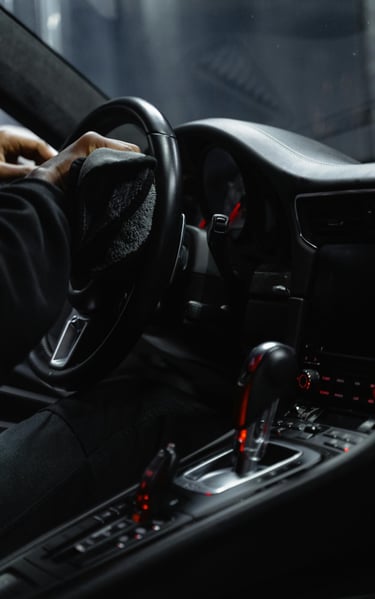
Dust, dirt, exhaust, and odors are absorbed by your car's interior surfaces. Eventually, that new car look and smell is gone. Visible soiling and discoloration accumulates on fabric, vinyl, and leather surfaces. To preserve and protect your car's interior from premature wear and tear, proper interior maintenance and protective conditioning treatments are recommended on annual basis.
Environmental pollution, corrosion, and the sun's ultraviolet rays attack your car's finish on a daily basis. Rust and metallic particles penetrate your car's surface leaving the finish feeling rough and gritty. This fallout is especially visible on white or light colored vehicles.
This is sometimes referred to as clear coat haze. Your car's finish provides more than beauty. Over time, a car's paint erodes due to the effects of sunlight, UV radiation, acid rain, salt, dirt, and air pollution. Wax your car every six months with a quality wax or polish. More frequent waxes are needed if your car is red, black or white because these colors are more susceptible to acid rain and UV rays.
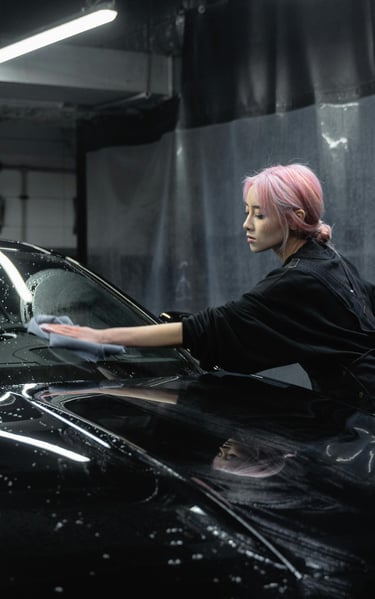
We’ve all been told that a good wax job on your vehicle will protect the finish. Regular waxing will protect your automotive investment over time. Many car owners equate this regular waxing process to spending hours in the garage sweating over the car applying every ounce of elbow grease available. Not pleasant. The use of modern polishers and high speed orbitals has since eased the intensive labor of hand waxing the entire vehicle. It still requires lots of work to take faded oxidized paint and return the appearance to clean and shiny.
The key of course is to be consistent with regular washing and waxing maintenance as to significantly reduce the physical labor required for each cleaning. What needs to be understood is the fact that wax on our vehicle does not last too long. In fact, several types of waxes with different levels of protection and wear are available (Carnuba, Polymer, Bayberry, Wool Wax, etc). Additionally, synthetic waxes and associative compounds are available and growing in abundance as well. Chemists have, and will continue to attempt to produce the highest quality and longest lasting waxes for our car, truck, SUV, boat and RV needs.
Expertise in car detailing. Best in Milton area.
Over the past decade, car manufacturers have developed different paint systems to improve durability. In the 1980's domestic cars had conventional finishes, that is, a pigmented enamel coat on top of the primer. Today, 96% of all new cars have a base coat/clear coat finish, which is comprised of a thin color coat covered by a clear acrylic or enamel urethane coat. This clear coat finish is only 2 mils thick—about the thickness of an ordinary plastic trash bag. Daily wear and tear on a car's clear coat finish may leave it with swirl marks or signs of oxidation. To the eye, it means a dull and hazy looking appearance.